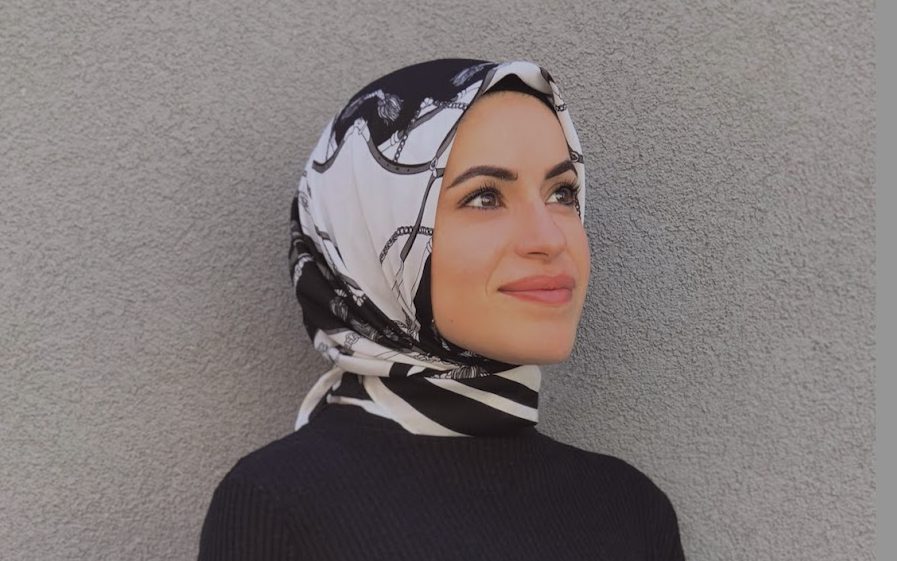
Mona’s work as a chaplain, spiritual director, and sacred activist weaves together contemplation, creativity, and care. Her approach to faith and art advocates for sustainability, simplicity, and walking gently upon the Earth. She leads workshops, retreats, and lectures worldwide, guiding communities toward healing and spiritual connection through art, poetry, and prayerful action. The following is by Mona in her own words about her Philosophy and practice:
A Practice of Mercy
“And We have not sent you except as a mercy to the worlds.”
— Qur’an 21:107
My work as a chaplain, artist, educator, activist, and person of faith is rooted in a simple question:
If I claim to follow the Prophet Muhammad ﷺ, what would it mean for my life to become a source of mercy?
The Qur’an describes the Prophet ﷺ as rahmatan lil-‘alamin—a mercy to the worlds. That description is not limited to a particular community, ethnicity, or group of people who already share our beliefs. It is expansive. His mercy was extended to people, animals, creation, neighbors, strangers, friends, opponents, and those who were struggling to find their way.
That has become one of the central questions of my own practice:
How do I become a mercy to all whom I encounter?
The Prophet ﷺ said:
“The merciful are shown mercy by the Most Merciful. Be merciful to those on earth and the One above the heavens will have mercy upon you.”
Al-rahimuna yarhamuhum al-Rahman.
This is a practice I try to bring into my everyday life.
Mercy as a Way of Being
For me, mercy (rahmah) is not sentimentality.
It shapes how we speak to people, how we listen, how we respond to someone’s suffering, how we treat people with whom we disagree, how we care for the vulnerable, and how we understand our responsibilities to one another.
It asks me to consider what kind of presence I am bringing into a room.
Am I making people feel more human or less human?
Am I increasing fear or creating safety? Am I bringing gladness to the hearts or pushing people away?
Am I responding to someone’s vulnerability with judgment or care?
Am I making room for someone to be complicated, unfinished, uncertain, or struggling?
These questions are part of my spiritual practice as a chaplain.
Chaplaincy as a Practice of Mercy
My work as a chaplain gives me a daily opportunity to practice this.
People come to chaplaincy at some of the most significant moments of their lives: when someone is sick, dying, grieving, celebrating, questioning, afraid, lonely, overwhelmed, or searching for meaning.
I try to meet people exactly where they are.
Sometimes that means prayer. Sometimes it means silence. Sometimes it means listening. Sometimes it means direct teaching. Sometimes it means helping someone make sense of what has happened to them. Sometimes it means sitting beside someone who has no words.
It also means caring for people whose beliefs, backgrounds, politics, identities, and experiences may be very different from my own.
That is important to me.
If my faith teaches me that the Prophet ﷺ was sent as a mercy to the worlds, then my chaplaincy cannot be a practice of mercy only toward people who look like me, believe like me, or understand the world as I do.
The person in front of me is worthy of care and nurturing.
This is where I see my theological training becoming something less theoretical and more practical. I’m not merely a theologian or someone trained in theology, instead I see myself more as a companion upon the journey of life.
Mercy Toward Everyone
I am interested in what it would mean to take seriously the idea that our religious life should make us more merciful people.
More merciful with our families.
More merciful with strangers.
More merciful with people we disagree with.
More merciful with people who have hurt us.
More merciful with people whose beliefs we find difficult.
More merciful with ourselves.
More merciful toward the earth and the creatures with whom we share it.
This doesn’t mean abandoning conviction or pretending that differences don’t matter.
It means allowing our convictions to shape the character with which we move through the world.
If we believe the Prophet ﷺ came as a mercy, then following his path should make us people through whom others experience something of that mercy.
That is a high standard. I don’t always live up to this but this is the direction I am consciously trying to move in. InshaAllah.
Da’wah as Mercy
My experience with Ask A Muslim profoundly shaped how I think about da’wah.
Inviting people toward Islam requires more than knowing what to say. It requires knowing how to be with people.
People have questions.
People have fears.
People carry assumptions about Muslims that may have been formed by media, politics, personal experience, or painful encounters.
And sometimes people are simply curious.
I want to meet that curiosity with generosity.
I want people to feel that they can ask me difficult questions and still be treated with dignity.
For me, da’wah is connected to rahmah.
It is an invitation rooted in care and compassion.
It must be willingness to encounter another person as a human being rather than as a project even if it puts me out of my comfort zone, even if it makes me uncomfortable. I must be able to encounter human beings holistically- wholly, holy.
It is the practice of representing my faith in a way that I hope reflects the mercy I believe is at its center.

